




Remember the opening scene of Mean Girls? We all think of the classic “homeschooled jungle freak” line, but there’s another great quote near the beginning:
“And on the Third Day, God created the Remington bolt-action rifle, so that Man could fight the dinosaurs”
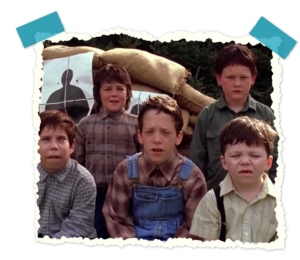
Homeschooled boy describes the Biblical Third Day. Mark Waters, Mean Girls. Paramount Pictures. 2004.
It’s the stereotype we all associate with homeschooling – sheltered, unsocialised and poorly educated children with no real-world skills. However, it’s an outdated belief for many South African parents choosing this alternative to avoid skyrocketing school fees and subpar education. Looking for a modern solution?
Here’s a quick ‘cheat sheet’ for homeschooling in 2026:
Why are parents making the switch?
Since Covid-19 lockdowns, more parents have opted out of traditional school environments. With modern technology, the transition to home education is a user-friendly process. Everything a parent could need is typically one internet search away.
Here are common reasons parents move to home education:
-
Escalating school fees foster doubts about whether the quality of traditional education is worth the steep cost.
-
The rigid structure of school prioritises a ‘one-size-fits-all’ standard, rather than the best approach for each child’s success. This leads to many learners falling through the cracks.
-
South Africa’s national standard of education is commonly perceived as insufficient in preparing learners for future employment with life skills and qualifications.
-
Safety and mental health is a major concern among parents who are seeking an environment that supports their child’s well-being, especially when bullying is involved.
-
Traditional school lacks flexibility and doesn’t typically accommodate for other curricula or learners pursuing exceptional qualifications in sport or culture.
Warning: Homeschooling is not hands-off.
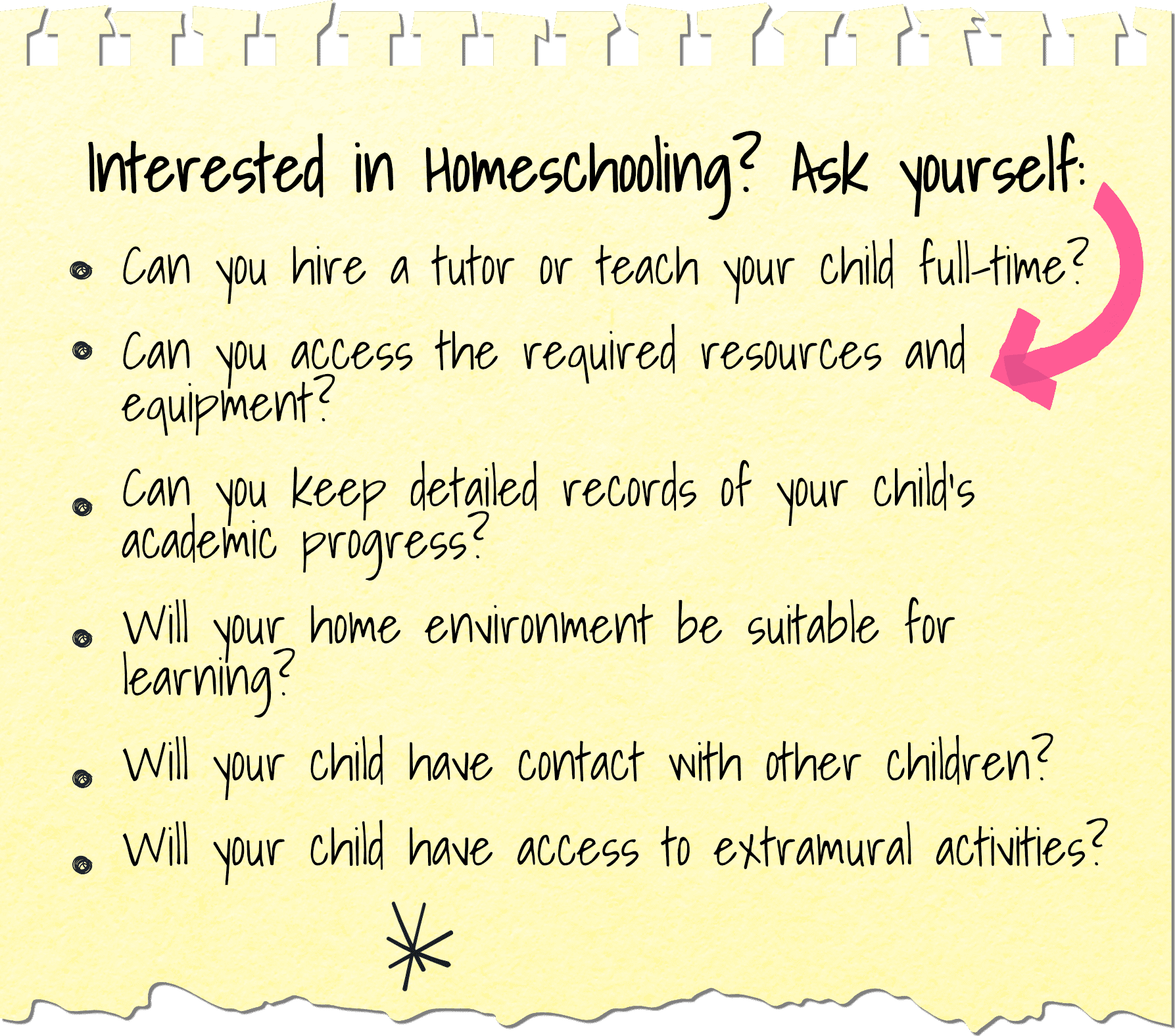
Don’t let the word ‘home’ fool you, parents. Home education is a commitment that comes with its own unique challenges. Someone needs to take full-time responsibility for your child’s education. If you can’t hire a tutor, it’ll have to be you or your partner.
If it’s your role to teach, you likely cannot be employed full-time. It’s important for you to consider whether your household can stay afloat with a smaller income. Plus, homeschooling will require learning material and testing that needs to be included in the budget.
Have you heard these myths?
-
“My child won’t be socialised at home”
Given that school plays an important role in exposing children to social interaction, it’s fair for parents to be concerned about their child’s social development.
The reality is not that simple. Research suggests that skeptical parents aren’t looking at socialisation from the right angle. Instead, consider the type of socialisation your child experiences. Children in traditional school can still be poorly socialised if they don’t have good friends, participate in extramurals or if they experience bullying.
Janet Kieswetter from the Gauteng association for Homeschooling pushes back on this myth, saying, “We don’t learn in a bubble”. She also reminds skeptics that homeschooled children can still form peer friendships and participate in extramurals – these are the sources of social input found in public and private schools. Where bullying occurs, homeschooling may be more beneficial for a child’s social development and for their academics. Additionally, the increased time shared between children and their parents often leads to stronger familial bonds.
-
“My child won’t have a valuable education.”
Parents tend to imagine a situation where they have to teach subjects they don’t understand. Or the concern may be that their children receive an education that’s completely unregulated and insufficient.
Don’t worry, the Department of Basic Education is still responsible for homeschooled children. Parents simply need to register their children for home education and keep up-to-date academic records. Approved learning resources are typically accessible online. Similar to traditional schools, home education incorporates tests and assessments. The Department of Education also requires children to follow a chosen curriculum.
-
“My child won’t survive in the real world.”
This might come from a belief that children need to experience a ‘normal’ school environment to succeed in tertiary education and the workplace.
On the contrary, home education grants children an early start when choosing their own path. The flexibility to choose their own curriculum means that homeschooled children receive an education that is tailored to their strengths and talents. Online schools such as CambriLearn offer the accredited CAPS, IEB and the British curriculum, which may allow them to study abroad in the future.
Home education also promotes individual learning styles that are self-paced. This allows learners to breeze through areas where they succeed and dedicate more time to areas where they struggle, which may promote better assessment outcomes. This flexibility is also preferred among gifted children who pursue milestones in culture and sports.
Are you ready for homeschooling?
Before you jump headfirst into home education, look for guidance from local support groups and advocates. Shirley Erwee is well-known in South Africa’s homeschooling community for her writing. She provides online resources for parents switching to home education and operates GoPrep™, which provides accredited learning material for the GED curriculum.
You’ll also need to apply and register for home education through the Department of Basic Education. Make sure to contact your province’s Home Education Co-ordinator for additional guidance.
Like any long-term goal, home education will take time, research and financial input. It won’t be an easy fix. But your reward is an education that allows vast, global opportunities for your child. Will you join thousands of South African parents and make the switch? If your answer is yes – we wish you all the best on your home education journey!
Read more from us 👉 Create your own Vision Board for 2026
For more information:
-
Janet Kieswetter (Gauteng Association for Homeschooling). Newzroom Afrika. YouTube. https://www.youtube.com/watch?v=JiZVYxXifzY
-
Rakhee Naik. KLA. The rise of alternative schooling options in South Africa. 2024. https://ramify.biz/Agency/NewsroomArticle?NewsId=3253
-
Malcolm Libera. Business Tech. South Africans walking away from traditional private and public schools. 2025. https://businesstech.co.za/news/lifestyle/835343/south-africans-walking-away-from-traditional-private-and-public-schools/
-
Coalition for Responsible Home Education. What the Research Says on Socialization. n.d. https://crhe.org/research/summaries/homeschooling-socialization/
-
How to Start Homeschooling. https://startinghomeschooling.co.za/
-
CambriLearn. https://cambrilearn.com/
-
Go Prep™ – Online GED Prep for South Africa. https://goprep.co.za/
-
Home Education. https://www.education.gov.za/Programmes/HomeEducation.aspx